Planning and Logistics
Bar Service and Ohio Liquor Rules
Understand how alcohol is served at an Ohio event: licensed servers, cash and open bars, drink tickets, last call and keeping guests safe.
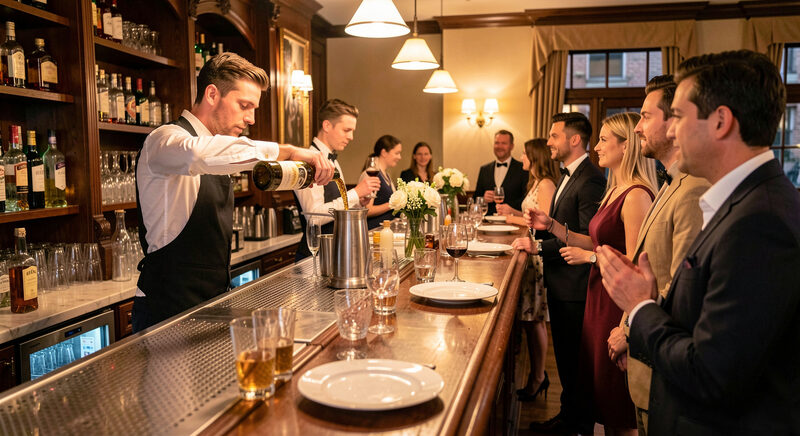
Alcohol is the part of a banquet that carries the most rules and the most surprises. It is also the line on the bill that varies most, which is why it deserves to be settled early, in writing, and with the venue's licence and the state's rules clearly understood. A bar that is planned well disappears into the background of a good evening. A bar that is improvised becomes the thing everyone remembers.
This guide explains the main ways alcohol is served at an Ohio event, how each one is usually billed, and how to keep guests safe and the host protected.
Who may serve alcohol
The first question is not what to drink but who is allowed to serve it. In Ohio, alcohol is sold and served under a licence, and a private event usually falls into one of a few situations. A hall that holds its own licence can serve its guests directly. A hall without a licence may require a licensed caterer to run the bar, or it may allow the host to obtain a permit for the event. A private club may operate under its own licence for its members and guests.
Because the rules and the permits change, the venue should be asked plainly: who holds the licence for this event, and who is responsible if something goes wrong. A hall that cannot answer is a hall to press on, or to avoid for an event with alcohol.
The cash bar
A cash bar lets guests buy their own drinks. The host usually pays only for the bartender and any setup, and the guests pay for what they drink. It is the cheapest option for the host and a common choice at fundraisers, reunions and family gatherings. The trade-off is that guests open their wallets during the party, which some hosts prefer to avoid.
Ask whether the venue accepts cash only or cards as well, and whether there is an ATM on site. A cash bar that takes only cash, with no machine nearby, is a small frustration that is easy to prevent.
The open bar
An open bar lets guests drink at the host's expense, and it is billed in one of three ways. Per person for a set number of hours is the most predictable: the host pays a fixed rate for each guest for the length of the bar. Per drink consumed is the most variable, because the final bill depends on what guests actually drank. A flat package for a set number of hours is a middle path. An open bar is generous and popular, and it is also the line most likely to surprise the host if it is billed per drink.
If the venue offers a cap, take it. Many halls will run an open bar to a fixed limit and switch to a cash bar when the limit is reached, which protects the budget without stopping the evening. Ask how the switch is announced so guests are not caught off guard.
The limited bar
A limited bar of beer, wine and soft drinks sits between the two. It is cheaper than a full open bar, it suits a family gathering or a memorial reception, and it avoids the awkwardness of a cash bar for guests who expect a drink to be offered. Many hosts choose a limited bar and let guests buy spirits if they want them. It is often the most sensible choice for a West Side banquet.
Drink tickets and consumption control
Drink tickets give each guest a set number of drinks and are a simple way to control both cost and pace. A host can hand out tickets with the invitation, at the door, or at the table. Tickets also give the bartender a clear rule to follow, which makes the job easier and the room calmer. A two-drink ticket is a common and courteous limit.
Serving safely and staying within the law
Whoever serves the alcohol has a responsibility not to serve a guest who is clearly intoxicated, and not to serve anyone under the legal drinking age. A professional bartender knows this and will refuse a drink when it is the right thing to do. Support that decision rather than overruling it, and make sure food and water are available throughout the evening. A clear last call, announced before the bar closes, winds the evening down gently.
It is also worth checking the current requirements with the state authority before the event, because the details can change and a fundraiser or a public event may carry extra obligations. The Ohio Division of Liquor Control publishes the current rules and permit information.
Soft drinks, coffee and the guests who do not drink
A bar is not only about alcohol. Guests who do not drink, whether by choice, for health or for religious reasons, should find something good to drink without having to ask for it. Offer a proper non-alcoholic option, not just water: soft drinks, a fruit punch, iced tea, and coffee and tea through the evening. Put them where they are as easy to reach as the bar, and make sure they are free or clearly priced. A host who looks after the non-drinkers makes the whole room more comfortable, and the cost is small.
Planning the bar into the room
Place the bar where a short queue can form without blocking a doorway or the dance floor. One bar serves a small event; a large reception may need two, especially if the room is split. Ask where the bar will sit in the layout and whether a second bar changes the staffing cost. The room plan is covered in capacity and room layout.
With the bar settled, the remaining logistics are the sound, the parking and the paperwork, gathered under planning and logistics. Hosts still costing the event can check the bar against the rest of the bill in what a banquet hall costs.