Choosing a Venue
Choosing a Banquet Hall
Work through capacity, layout, dance floor, kitchen, parking and price before you sign, and learn how the halls of Cincinnati's West Side compare.
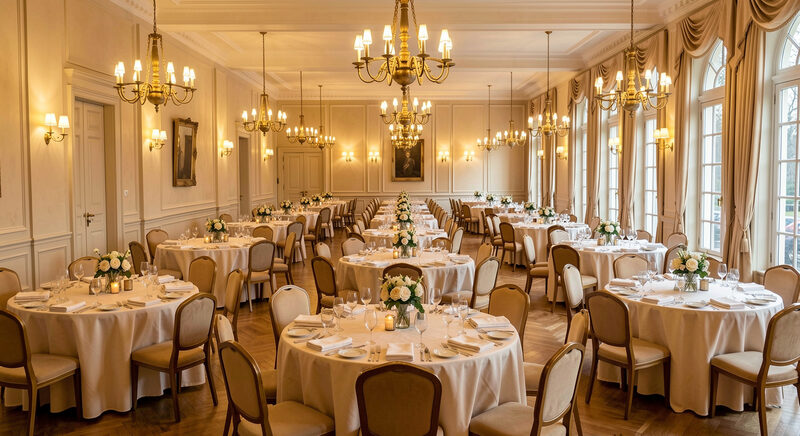
Choosing a banquet hall is really a series of small decisions that have to agree with one another. The guest list sets the room. The room sets the layout. The layout sets how dinner is served. The menu sets the bar. Every one of those choices shows up later on an invoice, and the halls that feel easy to work with are usually the ones where the questions were asked early, before anything was signed.
On Cincinnati's West Side, a couple or a family usually has a handful of real options within a short drive: a fraternal hall, a parish hall, a hotel ballroom, a restaurant back room or a purpose-built banquet center. They are not interchangeable, and choosing is mostly the work of deciding which trade you can live with.
Start with the guest list, not the room
The single most useful number to settle first is how many people are actually coming. Not the optimistic number, and not the number that would be nice, but the honest count of guests who will drive across town on a Saturday. A room built for 400 seated guests feels empty and cold at 120, and the same room at 380 leaves the dance floor crowded and the buffet line long. Ask the venue for its seated capacity and its standing capacity separately, because a hall that holds 300 at a reception with tables may hold far fewer once a dance floor, a bar, a gift table and a stage are added.
Once the count is firm, the room choice narrows quickly. The guide to capacity and room layout walks through the arithmetic of round tables, long tables and the space a band or a DJ actually needs.
Seated capacity, dance floor and stage
Two rooms of the same square footage can hold very different events. Round tables of eight or ten seat more people in the same area than long rectangular tables, but they need wider aisles so guests can reach their seats. A buffet needs a clear lane that does not cross the dance floor. A live band needs a stage and power; a DJ needs a corner and a table. A bar should sit where a line can form without blocking a doorway. Ask to see the room set for the size of event you are planning, not the size the venue would like to sell, and ask to look at a floor plan from a past event that matches your guest count.
The kitchen question
Food is where a banquet budget is made or lost, so it is worth knowing early whether the venue cooks on site or brings in a caterer. A hall with its own kitchen can usually offer package pricing that bundles the room, the meal, the staff and the bar. A hall that rents the room alone may let you choose your own caterer, which can be cheaper or more expensive depending on the caterer and on any kitchen fee the hall charges. Some venues allow only approved caterers, and some allow a family to bring in home cooking for a smaller, quieter gathering.
Whatever the arrangement, ask who holds the food licence, who handles allergies and dietary needs, and whether the kitchen is available for a caterer to use and at what cost. The choice between a buffet and plated service is covered in buffet or plated dinner, and it changes the kitchen requirements as much as it changes the menu.
Parking, arrival and access
Guests remember the last hundred yards. A hall with its own lot and a covered entrance is easier for older guests, for anyone using a wheelchair or a walker, and for the family carrying a cake and a gift table in the rain. Street parking works in some West Side neighborhoods and fails badly in others on a Friday evening. Ask where guests will park, whether the lot is shared, whether there is a drop-off point at the door, and whether the entrance is step-free.
The details that keep arrival calm are gathered in parking, access and guest comfort. They are unglamorous and they matter more than the chandeliers.
What a package includes, and what it hides
A package is a price for a bundle, and the bundle is where halls differ most. One venue's package may include the room for four hours, tables and chairs, white linens, a buffet with several menu choices, soft drinks, bartenders and servers. Another may include only the room and the tables, with every other line billed separately. Neither is dishonest, but they cannot be compared until both are broken into the same list of items.
Ask for the quote in writing, item by item, and ask which charges are added at the end: a service charge, sales tax, a cake-cutting fee, a corkage fee, a fee for the room if you bring your own caterer, a charge for extra hours, and a deposit that may or may not be refundable. A per-guest price is only meaningful once those additions are known, which is why what a banquet hall costs treats the comparison as a small accounting exercise rather than a single number.
A short tour checklist
Walk the room at the hour you will use it, if you can, because a hall that photographs beautifully at noon can be dim and tight at eight in the evening. Check the lighting, the sound of the room when it is empty, the restrooms, the temperature control and where the electrical outlets sit. Ask who will be on site during the event and how to reach them. Bring the written list of questions to ask a banquet hall so nothing is left to memory on the drive home.
Where to go next
Once the venue is settled, the work divides cleanly: couples move on to wedding receptions, everyone else to banquets and gatherings, and the bar, sound and paperwork to planning and logistics.
Choosing a Venue
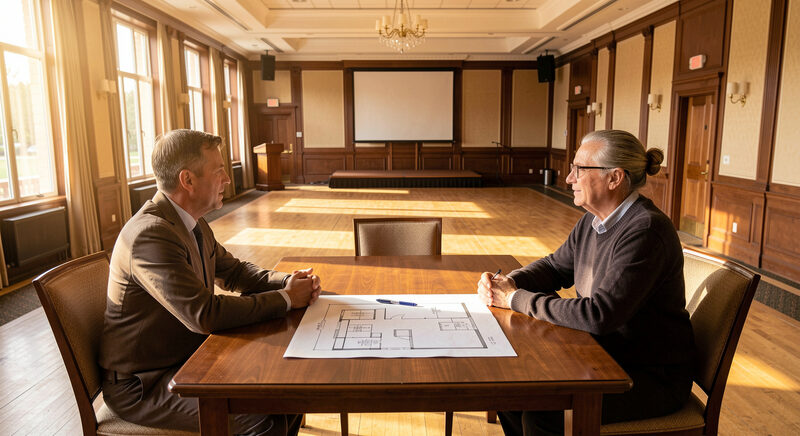
Questions to Ask a Banquet Hall
Bring this list to every tour: what is included, what costs extra, who staffs the room, when you may decorate and what happens if plans change.
The questions that turn a tour into a decision.
Choosing a Venue
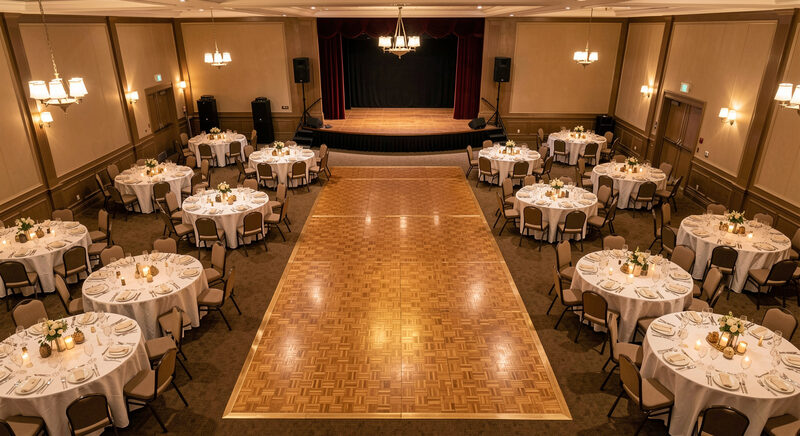
Capacity and Room Layout
Understand seated and standing capacity, round versus long tables, dance floor and stage space, and how a layout changes the feel of a room.
Seated, standing, and the space dancing quietly takes.
Choosing a Venue
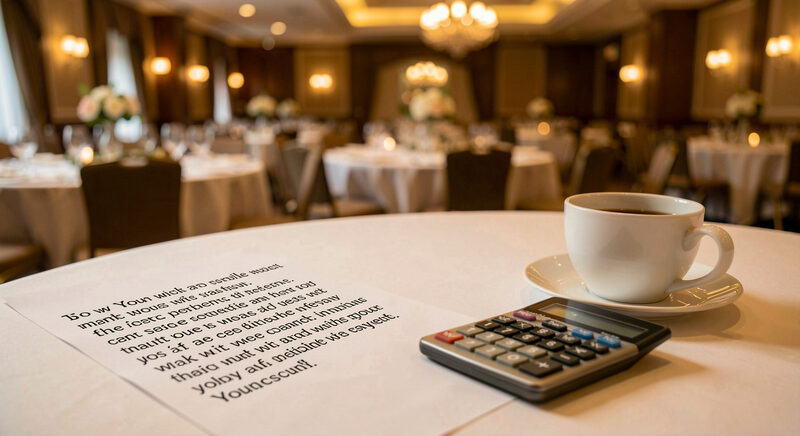
What a Banquet Hall Costs
See how halls on the West Side price a room, a buffet, a bar and staff, which fees are added on top, and how to compare two quotes honestly.
Two quotes, one language, a true cost per guest.